In the realm of network programming, the terms "port number" and "socket" are fundamental concepts that are often discussed interchangeably, yet they represent different entities within the network communication framework. Understanding the distinction between them is crucial for IT professionals who deal with network applications and protocols.
What Is a Port Number?
A port number is a numerical identifier in the TCP/IP networking model that is used by the transport layer protocols, namely TCP (Transmission Control Protocol) and UDP (User Datagram Protocol), to distinguish between multiple endpoints on a single host. In essence, when an application process initiates a network connection, it requests the operating system to allocate a port number for that session. This port number allows network traffic to be directed to the correct application process on a host, where multiple processes may be communicating over the network simultaneously. Port numbers range from 0 to 65535, with certain numbers reserved for well-known services (for example, HTTP on port 80).
The Three Port Ranges
The Internet Assigned Numbers Authority (IANA) divides the full 0-65535 range into three categories:
- Well-known ports (0-1023): Reserved for common, standardized services such as HTTP, HTTPS, and SSH.
- Registered ports (1024-49151): Assigned by IANA to specific applications and vendors, but not as tightly controlled as well-known ports.
- Dynamic or ephemeral ports (49152-65535): Allocated temporarily by the operating system for the client side of a connection, then released when the session ends.
Common Well-Known Ports
These are some of the ports IT professionals encounter most often:
| Port |
Protocol |
Service |
| 20 / 21 | TCP | FTP (File Transfer Protocol) |
| 22 | TCP | SSH (Secure Shell) |
| 25 | TCP | SMTP (email sending) |
| 53 | TCP/UDP | DNS (Domain Name System) |
| 80 | TCP | HTTP (web traffic) |
| 143 | TCP | IMAP (email retrieval) |
| 443 | TCP | HTTPS (encrypted web traffic) |
| 3389 | TCP | RDP (Remote Desktop Protocol) |
What Is a Socket?
A socket is a broader concept that encapsulates more than just the port number. It includes the IP address of the host as well as the protocol being used in addition to the port number. A socket, therefore, uniquely identifies a single endpoint of a two-way communication link between two programs running over the network. It can be visualized as the combination of an IP address, a port number, and a protocol, forming a complete address for network communication. For instance, a socket might be defined as (TCP, 192.168.1.1, 1028), where TCP is the protocol, 192.168.1.1 is the local IP address, and 1028 is the local port number.
While a port number might be reused across different protocols or IP addresses, a socket represents a unique endpoint. This distinction is particularly important when considering that a single machine, with a single IP address, can have multiple applications listening on different port numbers. In the same vein, the same port number can be used across different IP addresses and protocols, thereby necessitating the need for a more comprehensive identifier, which is the socket.
Moreover, in the context of network programming, a socket descriptor is a handle created by the operating system that allows an application to interface with a socket. This descriptor is a numerical value used by the application to reference a particular socket for the purposes of sending and receiving data.
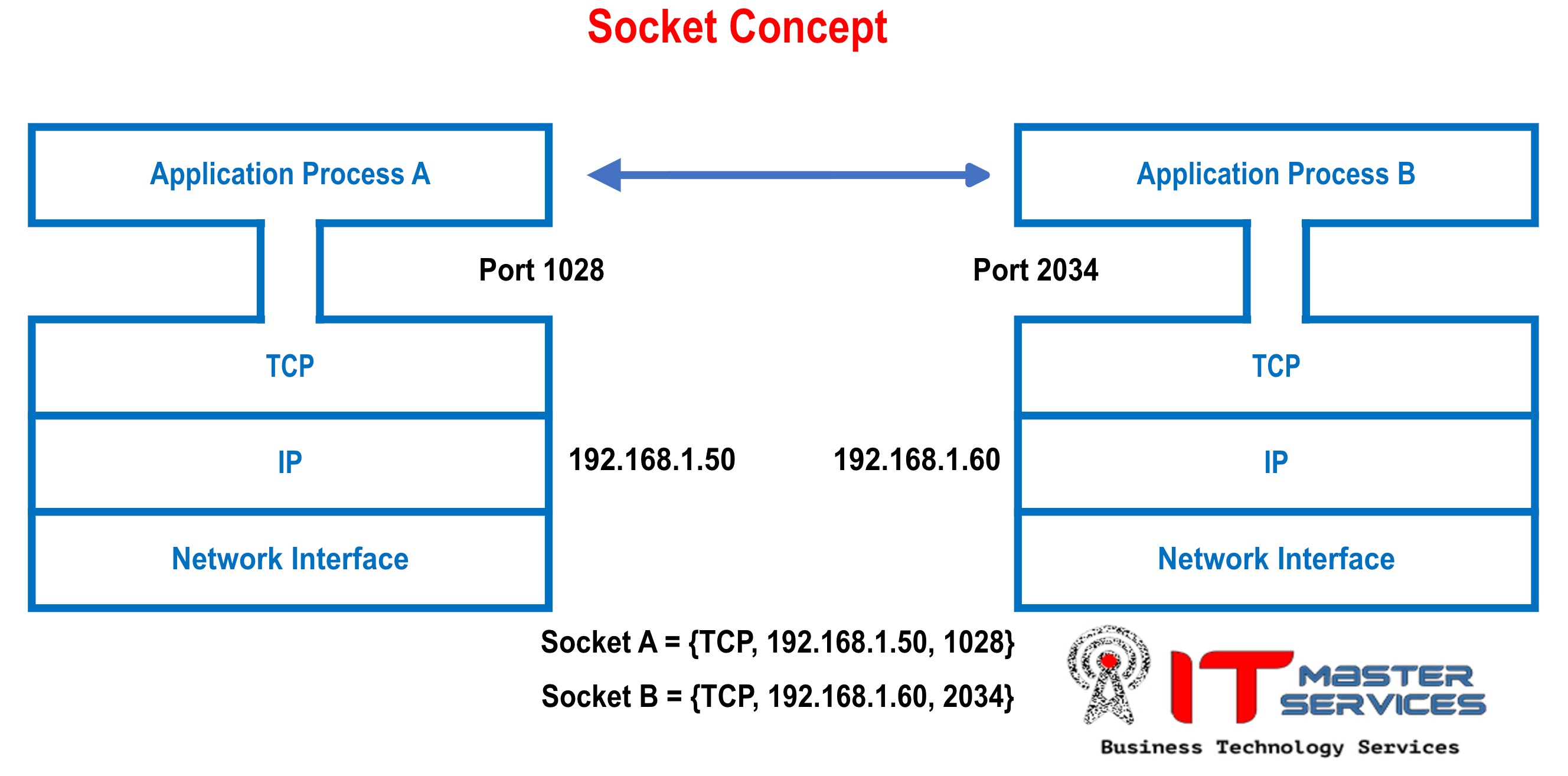
Figure 1, as referenced, illustrates the concept of a socket by showing two application processes communicating over a network. Each process has a unique socket composed of the TCP protocol, an IP address, and a port number. These sockets enable the two processes to establish a connection and communicate reliably.
Why This Matters
To sum up, while a port number is an integral part of a socket, it alone does not provide the full picture necessary for a network communication endpoint. A socket encompasses the port number along with the IP address and protocol, forming a complete and unique address for communication in the network layer. Understanding this difference is key to effectively managing and troubleshooting network applications and services - from diagnosing issues like those in our Beginner's Guide to Troubleshooting DNS to understanding how tools map open ports, as covered in our article on Nmap in Cybersecurity Practices.
Need help designing, securing, or troubleshooting your network? Our Network Services team can help.